
Many companies wonder how product manufacturing works, but the process is far more complex than simply producing an item in a factory. Behind every successful product is a structured process known as New Product Introduction (NPI), where an idea moves through research, engineering, prototyping, manufacturing planning, and large-scale production.
Understanding how this process works helps companies reduce risk, control costs, and bring new products to market successfully.
1Start With an Idea
Every product starts with an idea. Sometimes it’s a breakthrough innovation. More often, it’s a smart improvement to something that already exists. Either way, that initial spark is only the beginning of the New Product Introduction (NPI) journey.
Ideas are fluid. What seems simple at first often evolves once you begin asking the right questions. How will it actually be used? What materials make sense? What will it cost at scale? Early concepts are usually captured through sketches or rough renderings because they help translate a thought into something tangible cost effectively.
All new product ideas should be pressure-tested. Sales may see market opportunity differently than engineering. Supply chain may identify cost or sourcing constraints that marketing hasn’t considered. When those perspectives come together early, the product gets stronger before any real money is spent.
2Understanding the Market
Very few ideas are entirely new. Most products exist in some form already. The real question isn’t whether something similar exists — it’s whether your execution will be better.
What does the current market look like? Where are competitors succeeding? Where are they falling short? Is price the differentiator, or is it quality, functionality, design, or brand positioning?
This is often where the product begins to sharpen. Features are added. Others are removed. The idea becomes more defined, and its place in the market becomes clearer.
Done well, market analysis also clarifies which features truly matter to buyers and what trade-offs — cost, materials, performance, or design — will ultimately determine whether the product wins in its category.
2Design / Engineering (DFM)
Once the concept has direction, it’s time to formalize it. This is where design and engineering move the product from imagination to something that can actually be built.
In practical terms, this means creating a technical blueprint — drawings, CAD files, material specifications, assembly structure, packaging requirements, and a preliminary bill of materials. This process is called Design for Manufacturing (DFM).
DFM is where many products either succeed or fail. A design might look good on paper, but if it cannot be produced efficiently and consistently at scale, it will struggle commercially. Design and engineering decisions made here directly impact cost, quality, and long-term scalability.
4Prototyping & Proof of Concept
With the design defined, prototypes are built. This is where the product leaves the screen and becomes something you can hold and review in the real world.
Depending on complexity, prototypes may be 3D printed, machined, cast, or assembled using hybrid methods. They are rarely perfect representations of final production quality, but they allow testing of function, ergonomics, and usability.
This is the proof-of-concept phase. Refinements made here can prevent expensive tooling mistakes later. Prototypes are reviewed, refined, re-produced until they are as close to “actual mass production” as possible. If budget allows, very small production runs of prototypes can be produced for field and focus group testing, or even limited test-market analysis.
5Finding the Right Manufacturing Partners
At this point, many companies believe the next step is simply to find a factory. In reality, this is where experience matters most.
Not all factories are equal. Capability, process control, engineering depth, financial stability, and communication standards vary significantly. Selecting the right partner is less about the lowest quote and more about reliable execution over time.
IPS works with vetted factories where long-standing relationships allow us to manage quality expectations, protect intellectual property, and negotiate competitive pricing.
Brands need access to global supplier marketplaces, not just domestic “down the street” sources. Experienced supply chain networks are vital here to ensure products are produced in the most cost competitive factory networks with all the advantages needed to compete.
6Tooling and Pre-Production Planning
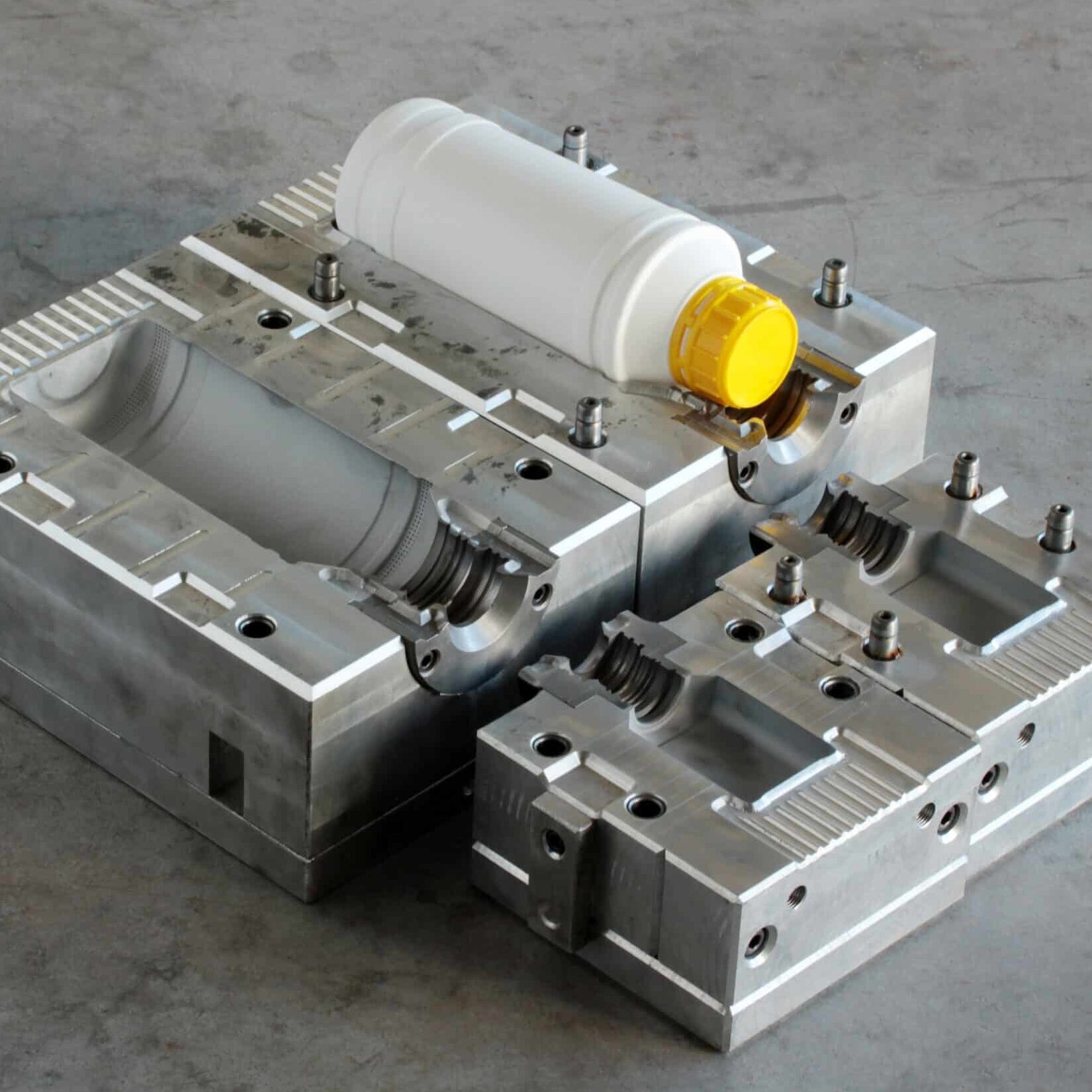
Tooling is often one of the largest upfront investments in product manufacturing. Injection molds, dies, and specialty tools require careful planning before production begins.
Manufacturers must understand not only what they are building, but how it will be built repeatedly and efficiently. Production flow, line layout, sub-assembly sequencing, and quality checkpoints are considered before tooling is finalized.
When this stage is handled correctly, production becomes predictable and cost-efficient.

7Mass Production & Quality Control
Once tooling is validated, mass production begins. Raw materials, labor, sub-suppliers, and scheduling must align to ensure consistent output.
Quality control is embedded into the process from start to finish. From incoming material inspection to in-process checks and pre-shipment inspections, defects are prevented rather than simply detected.
Risk factors such as currency shifts, geopolitical exposure, infrastructure limitations, and compliance requirements are monitored throughout production. These risk factors can drastically alter the performance metrics of the product, increasing costs and leadtimes for production, and decreasing quality and profits.
8Logistics and Final Delivery
Producing the product is only part of the journey. Moving it efficiently and safely across the globe is equally important.
Shipping modes are selected based on cost targets and timeline requirements. Most shipments move via ocean freight, but other options like commercial air transport are available. Importers that move large volumes have leverage to negotiate better shipping and transport rates. Upon arrival in the United States, goods must clear customs, meet regulatory standards, and be transported inland to the final-destination warehouses or distribution centers.
Only after duties, freight, inland transport, and handling are accounted for can total landed cost be accurately understood and accounted for.
Common Challenges in Global Manufacturing
Common challenges in global manufacturing often trace back to the decisions made earlier in the process.
Cost miscalculations
Legal exposure
Lead time delays
Tooling disputes
Compliance failures
Production instability
Communication gaps
Overreliance on a single country
These risks are manageable — but only when they are anticipated and structured into the process from the beginning.
When It Makes Sense to Partner with IPS
Partnering with IPS is most valuable when products are highly customized, internal sourcing resources are limited or stretched, margins are sensitive, compliance exposure is meaningful, or production is scaling rapidly.
Many companies underestimate the operational complexity of global manufacturing. Engineering validation, factory capability assessment, supplier negotiation, logistics planning, and quality control all require coordinated execution.
In these situations, professional oversight reduces variability, prevents costly mistakes, and protects both capital and brand equity.
When It May Not Make Sense to Use IPS
Direct sourcing may be appropriate for simple commodity products, companies with fully staffed in-country teams, habitual very small production volumes, or ultra-low-margin categories focused solely on immediate cost reduction.
However, IPS’s long-standing factory relationships and aggregated purchasing power often allow us to negotiate production pricing that is competitive with — and sometimes better than — what brands achieve independently.
Learn More About the ConceptForge™ Development Process
The stages outlined above represent the real-world workflow behind successful consumer product manufacturing. At IPS, this process is formalized through our ConceptForge™ development framework, which guides products from early concept through engineering, manufacturing, and global delivery.
ConceptForge helps brands reduce risk, control costs, and move from idea to production with a structured and proven methodology.